What a Research Desk Checks That a Price Feed Doesn't
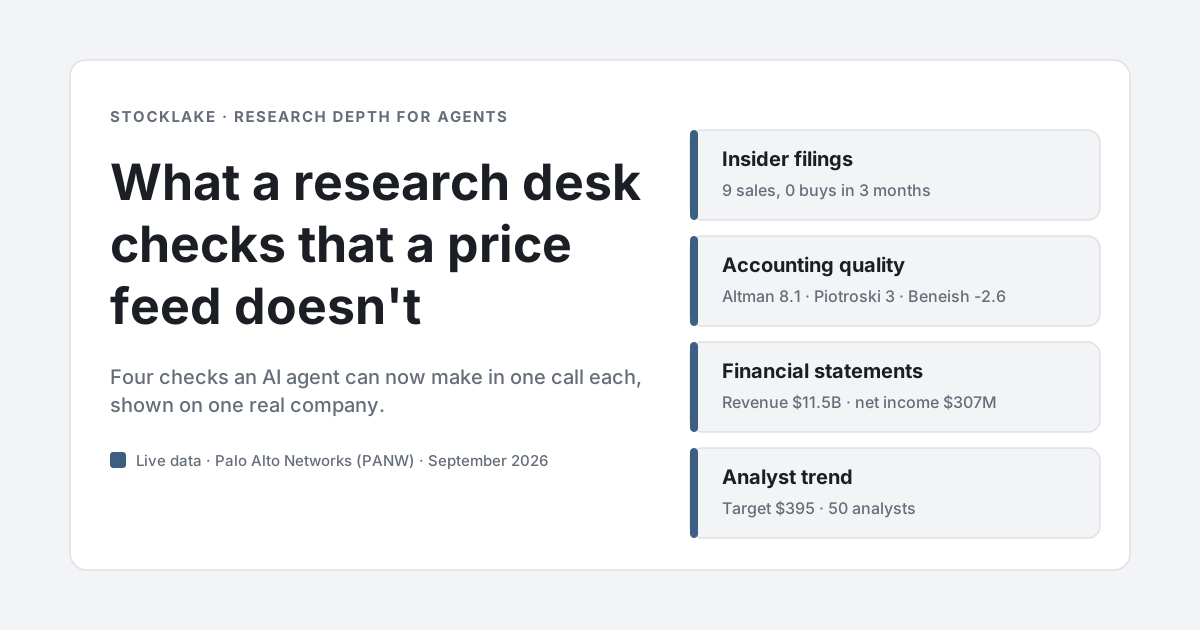
Ask an AI agent whether Palo Alto Networks is a healthy company and a price feed answers with a price, an RSI and a P/E. That is a quote, not an answer. An analyst at a research desk would open four other things first: what the insiders are doing, whether the accounts can be trusted, what the statements actually say, and where the analysts are heading.
This post runs one real company, PANW, through those four checks, one Stocklake call each. The numbers were pulled on 18-20 September 2026 and will move; the method won't. PANW is not a recommendation. It is here because its four checks disagree with each other in a useful way.
Check 1: what the insiders are doing
get_insider_activity returns the individual open-market transactions behind its counts. For PANW, since mid-June: nine sales and no purchases, about $8.7M in total. The largest was a $5.6M sale by a director on 12 June. The CFO sold $1.4M on 23 June. The chief accounting officer sold 900 shares on each of three separate dates.
Sales are not a verdict. Executives sell for tax and diversification reasons, and some sales are scheduled long in advance; the data we return does not say which. What an agent can say is that all the activity points one way, and can then go and look for why.
Check 2: can the accounts be trusted
The forensic_scores block on get_stock computes three classic screens from the company's own filed statements: Altman Z (balance-sheet health), Piotroski F (nine year-on-year quality tests) and Beneish M (earnings-manipulation screen).
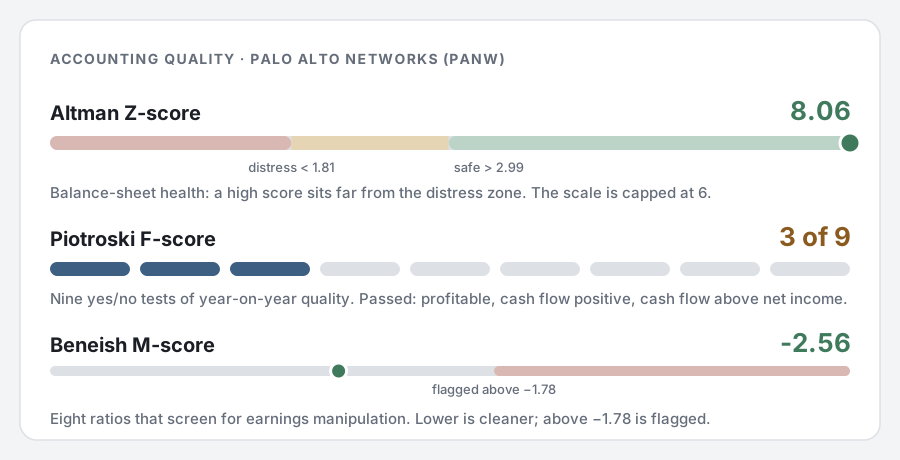
Altman says the balance sheet sits far from the distress zone. Beneish does not flag the accounts. Piotroski is the odd one out: PANW passed three of the nine tests (profitable, positive operating cash flow, cash flow above net income) and failed the six that ask whether things improved year on year: return on assets, leverage, current ratio, share count, gross margin and asset turnover. Solid, but not getting better on those measures. Banks and insurers return null on these scores, and a null comes with a note saying why; the forensic scores post covers the known limits.
Check 3: what the statements say
get_stock_financials returns the balance sheet, income statement and cash flow, up to five fiscal years or about eight quarters. Here is PANW's revenue against its net income.
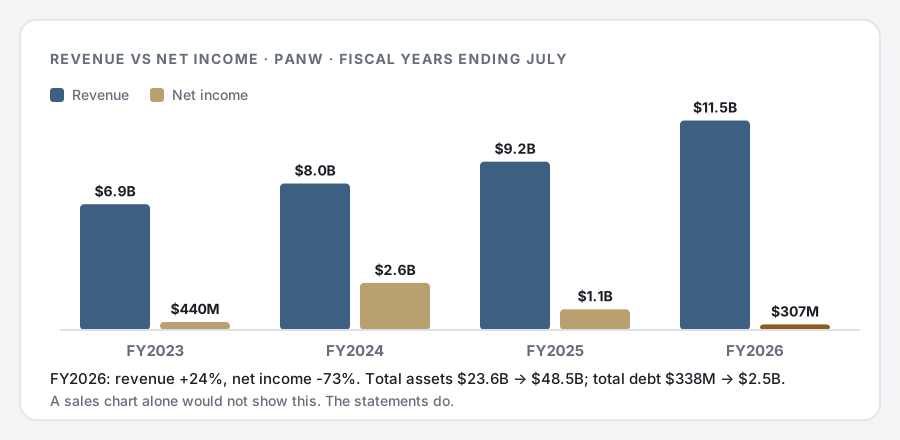
Revenue grew 24% to $11.5B. Net income fell 73% to $307M. Operating cash flow rose from $3.7B to $4.6B. Total assets roughly doubled, from $23.6B to $48.5B, and total debt went from $338M to $2.5B. That is growth, thinner profit, stronger cash generation and a balance sheet that changed shape this year. The statements show what changed, not why; the filing footnotes say why, and that is the next thing an agent or a person reads. It is also the same story the Piotroski score told, found automatically.
Check 4: where the analysts are heading
get_analyst_trend returns the history of the analyst consensus, one snapshot per weekday: rating, price target and analyst count. It answers a question a single snapshot cannot: is the Street getting more or less bullish?
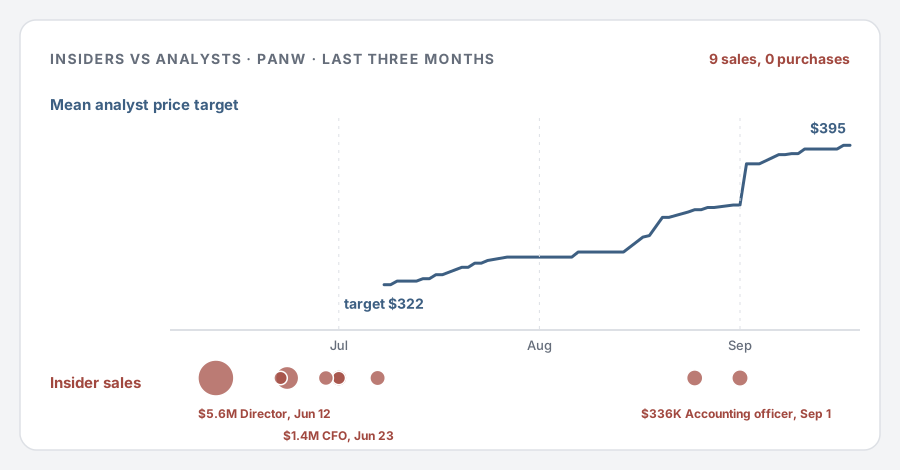
Fifty analysts rate PANW a buy (mean 1.65 on a scale where 1 is strong buy). Their mean price target climbed from $322 on 8 July to $395 on 18 September, while the shares traded around $362 at the last snapshot. So the same months that saw the analysts raise their targets saw the insiders sell. Neither side is wrong by default, and a price feed shows neither. Together with the statements and the scores, an agent now has a real question to answer.
Four calls, one question
| Check | Tool | Tier |
|---|---|---|
| Insider transactions | get_insider_activity | Free: 90 days. Pro: a full year plus holders |
| Accounting-quality scores | get_stock → forensic_scores | Pro |
| Financial statements | get_stock_financials | Free: latest year. Pro: 5 years and quarters |
| Analyst consensus history | get_analyst_trend | Pro |
A prompt like “check PANW: insiders, accounting quality, statements and analyst trend, and tell me where they agree and where they don't” is enough for a connected agent to make all four calls and write it up.
How much of the market this covers
Numbers from a live count on 20 September 2026, across the 3,212 equities we track:
| Data | Equities covered |
|---|---|
| Financial statements | 3,167 (99%) |
| Altman Z | 2,607 (81%) |
| Piotroski F | 2,547 (79%) |
| Beneish M | 1,709 (53%) |
| Insider transactions on record | 2,416 (75%): US 97%, Germany 28%, Netherlands 32%, Spain 39% |
Insider coverage outside the US is the thinnest part of the data. We publish the gaps instead of filling them with estimates, because an agent that knows a value is missing can say so; an agent handed a plausible guess cannot.
What this is not
These are screens, not verdicts, and the output is informational only, not financial advice. A low Piotroski score or a run of insider sales is a reason to read further, not to act. PANW is one example among about 3,200, chosen because its four checks pull in different directions.
Try it
Free keys cover the market-data tools, recent insider filings and the latest year of statements. The forensic scores, the analyst history and the longer windows are Pro. The full tool reference is at /docs/tools, and you can connect an MCP client with a magic link at /login.